Load tools
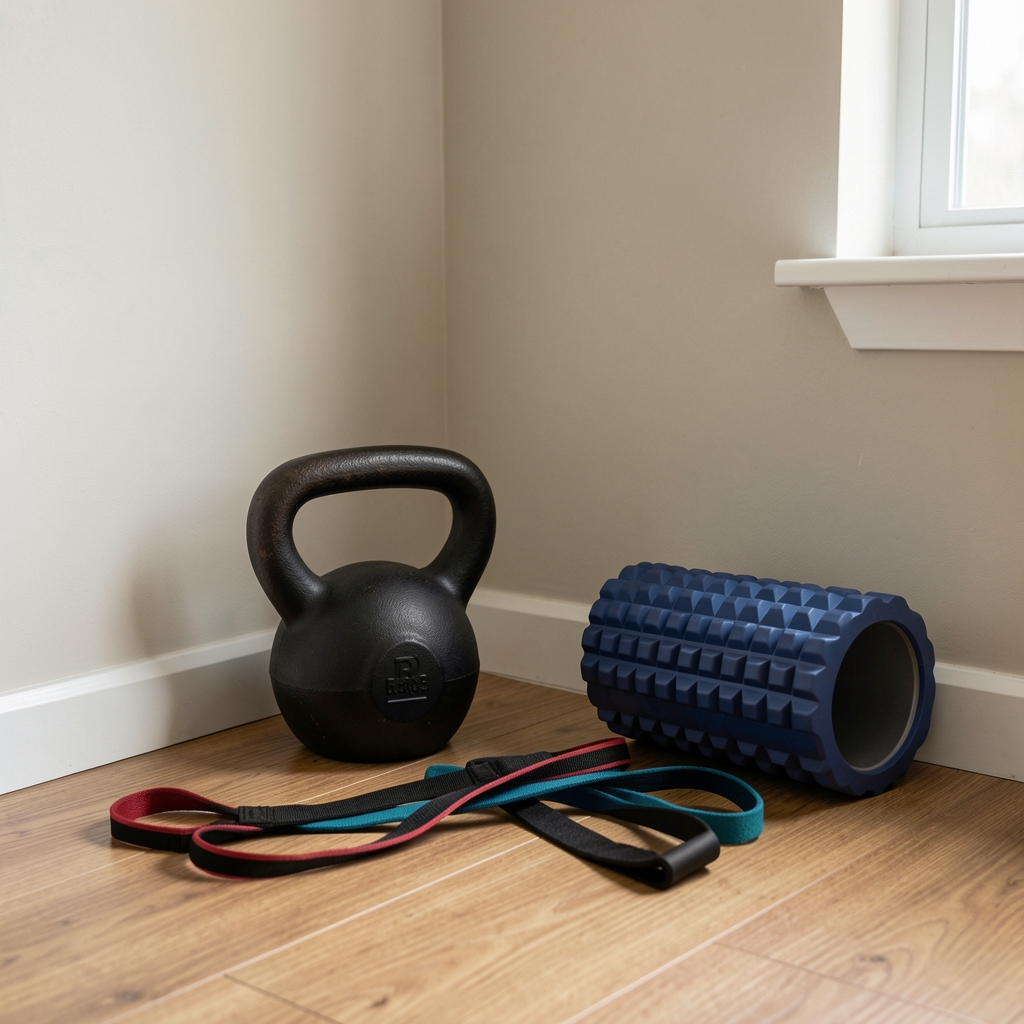
Kettlebells, dumbbells, or resistance bands provide adjustable resistance for strength work and can be stored in a small footprint.
Equipment desk · Updated 2026
A common misconception is that effective training requires a large, well-equipped gym. In practice, a small, well-chosen set of tools covers the large majority of exercises relevant to strength, mobility, and general conditioning for most adults. This page compares common equipment categories and offers a simple starting checklist for a modest home setup.
Kettlebells, dumbbells, or resistance bands provide adjustable resistance for strength work and can be stored in a small footprint.
A foam roller, a yoga mat, and a lacrosse ball cover most self-myofascial release and stretching needs at low cost.
A simple notebook, a stopwatch, or a basic fitness tracker help record sessions without requiring an elaborate setup.
| Equipment | Approximate space needed | Typical use |
|---|---|---|
| Adjustable dumbbells | Small, floor or shelf | Progressive strength work across many exercises |
| Kettlebell set | Small, floor | Swings, carries, and full-body conditioning |
| Resistance bands | Minimal, drawer-sized | Mobility work and travel-friendly strength training |
| Foam roller | Small, upright storage | Self-myofascial release after training |
| Pull-up bar | Doorway-mounted | Upper-body pulling strength |
Equipment choices should follow a training plan rather than lead it. Readers are encouraged to confirm a tool fits an existing routine before purchasing it, and to prioritize secondhand or shared equipment where practical, particularly for larger items that see infrequent use.